

Beata Leyland
Business Owner & Author of this article
Once the goods arrive at your warehouse delivery papers will be presented you. Before signing anything CHECK if all pallets arrived, if goods are damaged at least from the first glance.
Intrigued ?
Transport and logistics is a stressful and very complex sector of supply chain.
An essential jigsaw which is way more than just a truck, container and goods.
People working in it are planners, risk mitigation masters and creators who have nerves of steel.
As my first article “Logistic for Dummies” ended up being a big hit let me continue this series.
Today’s topic will cover a part which is obvious for specialists but very embarrassing to ask for my clients.
How is a truck loaded?
How is a container loaded and transported?
What do your client and you as a business owner need to be aware of?
When to panic and when not?
When is it worth to ask for help?
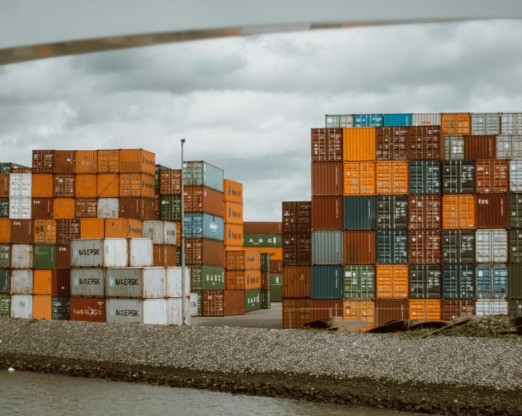
Let’s imagine Mark who is located in the U.S. and bought half a small container of goods from China.
If you don’t know what I am talking about already check my first article “Logistic for Dummies” where I tackled incoterms and basics about pallets.
Where to start?
Based on incoterms CIF a Chinese manufacturer will be responsible for preparing goods for overseas transport, insurance, making sure goods will be properly packed and delivered on time at port of embarkation.
Responsibility of the Manufacturer/ Seller based on CIF ends at the port of destination.
Please always carefully check what kind of incoterms are proposed as this part can safe you lot of time, money and unnecessary stress.
First step of your Seller will be to prepare goods.
Goods must be properly packed, described, protected and loaded on pallets.
Someone from the warehouse prepares transport documents where all what is packed is listed incl. dimensions, weight, duties, port of loading, destination, and delivery address of your company.
You will be approached to provide your Seller with all necessary data.
Correctly filled documents save lots of time!
Here also insurance is very important.
Some companies offer it as a package, for others you need to ask for a policy or get a recommendation of an insurance company.
Big manufacturers have their own trucks which they use to deliver goods to ports.
Driver packs prepared pallets on the truck, protects them so they will not be damaged during transport and then unloads them at the port of shipment.
Documents follow, and every time goods are received to different transport provider it should be a mark of that, either stamp or signature.
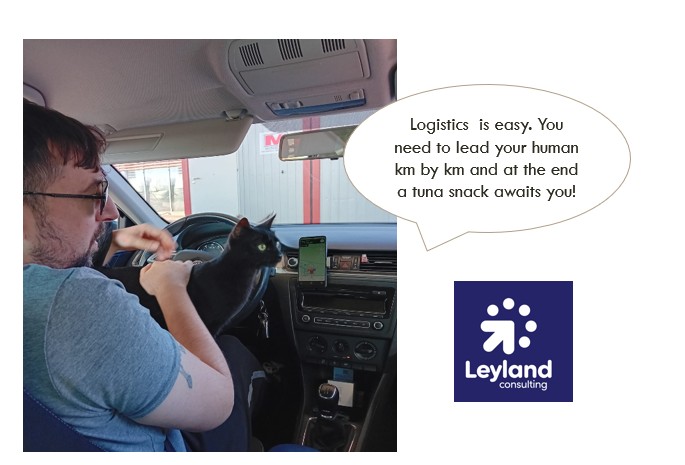
Now our goods are at the port of loading.
Ports are very specialised facilities, organized almost like airports (this is a simplification for readers to better understand!) so pallets can be loaded to the proper container.
If you share a container like in our example it’s customary that containers are loaded at once so once all pallets are ready to fill the container.
If your few pallets are “waiting” for another load they might be temporarily stored at the designated warehouse.
Choice of container depends on goods, but in general all of them are designed to keep humidity, temperature, and pressure very stable once sealed.
If you buy seafood or any other ingredients requiring freezing many times you have to order at least small container on your own because sharing a container with someone else might contaminate your products or make them spoil.
This same scenario applies to any food related products, grains, dairy, nuts as they have to be packed in sealed vacuum packages at the Seller’s warehouse but also put into a special type of container.
It’s very important to ask your Seller about the carrier which they use so you can sleep calmly without stress about your goods.
Once the container is fully loaded you will get a tracking number so like with courier you can follow your shipment.
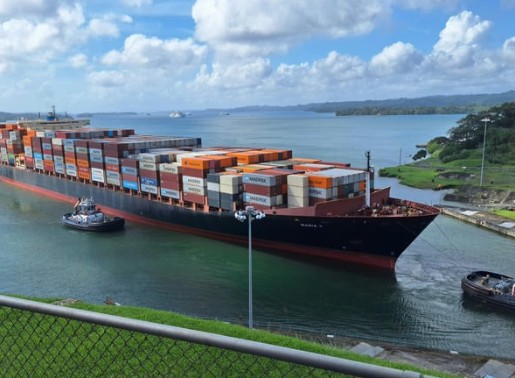
Don’t be surprised seeing container ship stopping for a few days at different ports.
Some containers will be added or removed during such stops and it’s nothing unusual.
If your container ship will have problems to cross and a delay occurs, you will be informed about it.
A containership between Europe and U.S. takes usually 2-3 weeks and the majority of this time is loading and unloading goods; that’s nothing unusual or reason to panic.
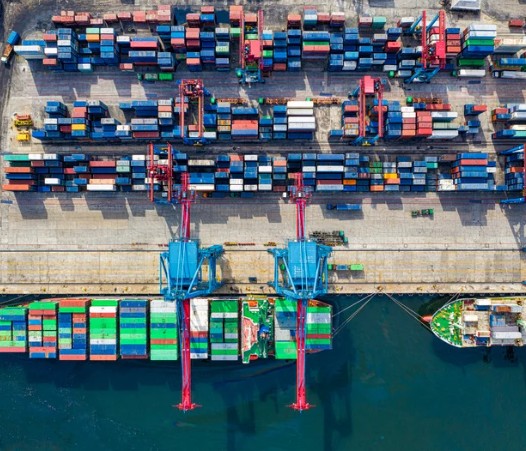
Coming back to our example between U.S. and China: after a few weeks you can expect your load arrived at the port of destination with all papers.
Based on CIF unloading at the port of import is negotiable; it could be on you or on the Seller. Let’s say it’s on you.
In such case once the load arrives you need to contact a logistic company which can help you on the ground.
Almost all companies have huge experience with ports, custom clearance, duties so I would suggest you ask them for help including unloading from the container ship, loading to the truck, filling all custom clearance papers, carriage to your warehouse and unloading.
Now the hot topics are duties and taxes.
How it works in practice?
If your goods are “interesting” for border control you will be asked to clarify what exactly you import, and in some cases, goods will be inspected and this can delay the process of delivery.
This is not the end!
Once the goods arrive at your warehouse delivery papers will be presented you.
Before signing anything CHECK if all pallets arrived, if goods are damaged at least from the first glance.
If something is damaged or missing that’s a time to report it so this step is very crucial.
Out of my experience, by choosing a good transport company you save yourself lots of hassle which doesn’t mean you might not need additional help (we recommend ourselves of course).
As regulations can change quite often regarding reclaiming import duties it’s crucial that you refer to a specialist who can help you and prices are not so crazy as many people might think.
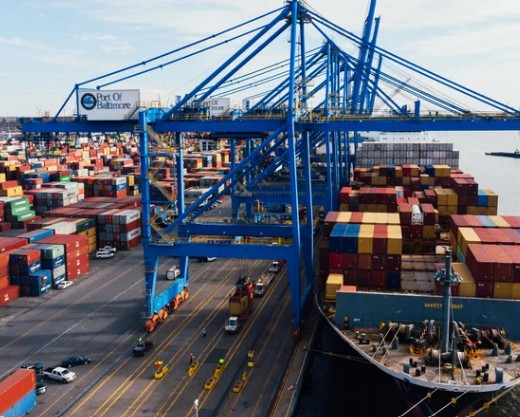
Damaged goods are quite common, that’s why it is so important to have good insurance, take plenty of pictures at the stage of preparing goods for the trip at the Seller’s warehouse and pack carefully all products so goods will not wabble on the pallet.
The better the goods are prepared, the higher rate the goods will arrive in excellent condition to your warehouse.
In a nutshell that’s how the whole process looks like.
In fact, a lot of depends on the type of goods which you import as it might be more or less complicated, however the schema is almost the same.
I hope now you see it’s not so scary.
If you are searching for someone who can help you booking your transport, make sure all documents are filled properly and have an eye on insurance claims or damaged goods we are happy to assist you.
 Call us,
 Text us,
 Book a Consultation
We work on the global clock
Book a Consultation
We work on the global clock 