
Beata Leyland
Business Owner & Author of this article
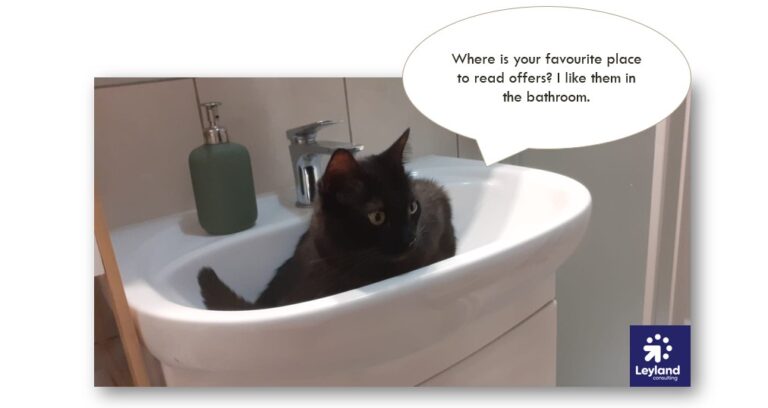
If you spend hours on reading offers it means that you don’t have good tools in place, simple as that.
Intrigued ?
How to read offers?
In the nutshell, carefully and with respect for the sender.
It’s many times easier said than done, as every sector might have a different methodology to calculate this same charge, different companies might approach the same figure differently so in order to compare offers you really need to not only read with comprehension but also understand what is behind the figures and that’s a totally different level of comprehension.
A consequence of misreading offers might cause you not only time but also lots on money.
You would be surprised how many companies lose money because they bought a cheap automation tool and either they spend hours to learn the new tool or they can’t read the reports.
This shouldn’t look like that!
Today I come to you with a few useful tips how to make your life easier, although some tips might look more complicated than they truly are.

STEP 0
When you ask multiple companies to provide you an offer make sure that the email title represents the true subject of your inquiry.
If you ask for transport costs for example, be explicit about it.
Try to create a title intuitive for both sides which will help you to find yourself later.
STEP 1
Report, some analytical tool.
When you compare multiple offers you need to find a solution how to compare them quickly and make sure all knowledge and remarks about companies are kept.
Reports, although they might look like additional chunk of work, save you time which you will spend on scrolling your emails.
STEP 2
Let’s say you ask company X for manufacturing costs of product Y.
I am pretty sure that you will see even for a very simple equation very different approach.
Why?
Because every organisation is different and works differently.
Let’s say you want to create your own product.
Manufacturing costs might be an equation of raw materials + transport + warehousing + utilities+ packaging + labour costs.
You might see one figure or multiple figures and an equation.
You might see detailed breakdown of warehousing costs by cubic meters or pallets.
Not in every example all of these details matter from the first glance, but when you plan to expand it would be useful to understand how companies work, what they offer, and what kind of possibilities this creates for you and your company.
Here is the trick, to know what kind of questions to ask and how to read them.
The best is to ask questions which will help you to understand if the manufacturing plant is aligned with your sales/business strategy.
The best way of asking questions about equations is to use real life examples and figures, so your counterpart can understand how you read their offer and correct you.
Asking overall questions might be confusing so be mindful and respectful towards your counterpart.
If you formulate your needs clearly, you spare lot of time for both parties.
If offer is too complicated for you, tell it but also express how you would like an offer to look like and what parts are missing and are not easy to read based on the initial one.
On a practical note, when I work with offers, I have time without any interruptions as it’s very easy to mess up.
I make sure I understand the methodology of calculating, what is behind the figures, what kind of story the price tells about the company and put all of these in the report.
That way, my clients have one report where they can see all what I’ve experienced while running a campaign.
They have access to the file all the time so it’s easier for them to follow the progress.
As clear as you translate offers, the better for everyone.
Simply make sure that the way how you approach such reporting is aligned with clients’ needs and outlook on business, sales strategy so you create something easy to use, easy to read and a great database to allow for serious business decisions.

STEP 3
If you don’t know how to read offers and are easily lost, believe me you are not the only one.
It takes a lot of real-life experience to create a report, analysis which is adjusted to your needs, not some crazy detailed file or very spotty report which many AI tools generate nowadays.
That’s why I am always asking business owners what they need and what they would like to use to don’t make them overwhelmed for no reason.
Reports should be first practical, tailored to your needs and easy to read.
Here at Leyland Consulting such reporting tools are used for almost every client.
Some don’t want it and we respect their way of working.
Statistically, 95% of clients love our reports and use them later as a part of company strategies because they are very down-to-earth files.
If you don’t understand figures, simply ask.
Ask as many relentless questions as possible because you must understand your offer in depth in order to make a decision.
It’s better to ask than be sorry later.
If you ask too many questions, it means the report is not adjusted to your needs.
Ask how to simplify or rebuild it so you can within 5-10 minutes assess what must be done.
You don’t need to take a decision within 5 minutes but you need to see what your data tells you.

If you feel overwhelmed, don’t worry about it. If you think that we are not, you are wrong.
There are offers and invoices which create a headache even for experienced people.
It’s a matter of attitude, attention to details, and such construction of reports to make sure the end user will not get insane and this takes time and practise.
My first reports were far from being simple.
If you need help not only with outreach to manufacturers and logistic companies but also with reporting, we are here for you.
We can simplify and adjust to your needs reports which you use, and they are far away from being good; or we can create reports from scratch which you would like to work with. Client, vendor, logistic, and inventory offers; you name it and we will gladly help you.
As a team we have extensive experience with different software and tools which can save you time, stress and money.
If you spend hours on reading offers it means that you don’t have good tools in place, simple as that.

 Call us,
 Text us,
 Book a Consultation
We work on the global clock
Book a Consultation
We work on the global clock 