
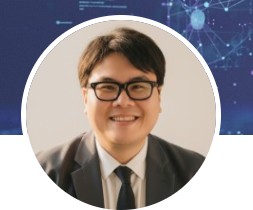
Beata Leyland & Tao Chun Liu
Authors of this article
Artificial Intelligence,Project Management , Education & more!
Intrigued ?
My meeting with Tao started from a spark of interest on LinkedIn and we connected soon after.
We have lots of things in common including volunteering, project management and trying to use our background to bring something positive to the world so I had a strong feeling it will be a great meeting, and it was.
As a result of it you can just dive in into this article.
Our goal is to show AI as a tool and us as users (no scarcity involved, no paid advertising rather focusing on facts).
As this tool is evolving none of us has a “crystal ball” to exactly predict the trajectory of the path.
Our idea is to make you interested, encourage you to think independently and try to find yourself in the new situation with dignity, an open mind and heart and feel empowered.
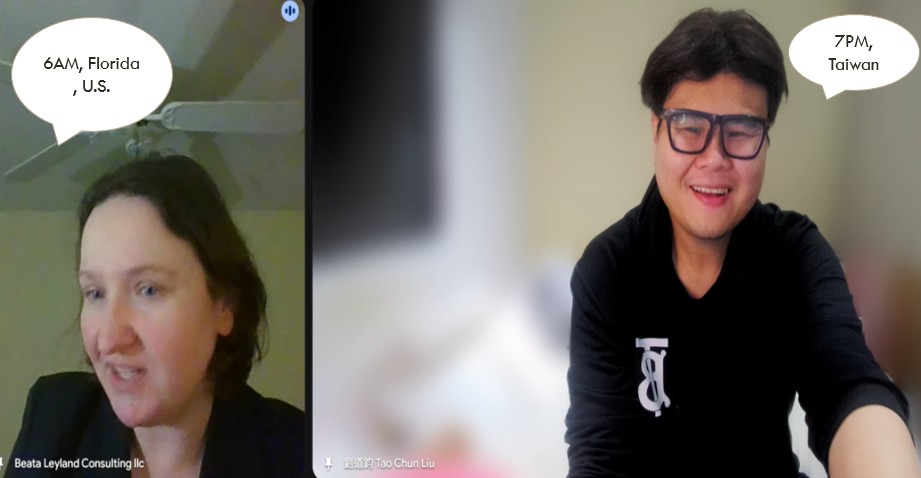
Let me describe you a bit both our profiles, so you can have a better understanding of our conversation.
TAO:
I see myself as the Mayor of the City of Project Management.
That is the philosophy behind my organization PM Mayors. In a real city a mayor is responsible for infrastructure, safety, and the well-being of the citizens. In the digital world my citizens are the millions of Project Managers who are currently overwhelmed by administrative chaos and rapid technological change.
My background is not just in observing these changes as a Futurist but in actively building the utilities and services that support these citizens.
I come from a rigorous scientific background but my career has been dedicated to this global community. I have served as a diplomat of sorts traveling to the PMI New Zealand Conference, the Lean and Agile Middle East summit, and upcoming engagements in Hong Kong to listen to the struggles of PMs on the ground.I have translated those struggles into policy and guidance through my contributions to major global publications like Reclaiming Agile’s Promise in 2025 and Pushing the Limits Transforming Project Management with Generative AI Innovation in 2024.
However a Mayor cannot just give speeches they must fix the potholes. That is why I am a builder. I specialize in Agentic AI and I have deployed over one thousand AI agents to act as the digital civil servants of our profession. Whether I am helping a FinTech firm automate their reporting or helping a non profit visualize their data my goal is to make the City of PM a place where humans can thrive without being buried under paperwork. I am here to ensure that every Project Manager has the tools they need to lead not just manage.

Beata:
As you all know I am passionate International Buyer with experience in manufacturing, consumer goods, nutraceuticals and more.
My mission is to help companies get service on the level which usually only big corporations can afford.
What do I mean by that? Service which is affordable, backed with clear communication and reports, and global.
You pay for 1 service but gets plenty of add-ons , which help you to find yourself in the new role.
Every project changes us and that’s what I try to emphasize: to see business as a development of ideas. Project Management tools are amazing scaffolding to achieve goals, no matter if you use their principles at work, in private, or during volunteering process.
Volunteering since few years is my huge passion/ mission as I believe that this what differentiates a happy person from an unhappy one is the way of thinking.
A source of distinction between a successful and failed company project lies primarily in knowledge and attitude towards knowledge, that’s why bringing awareness and exchanging ideas is a crucial part of doing business, creating any initiative to make a world a better place.
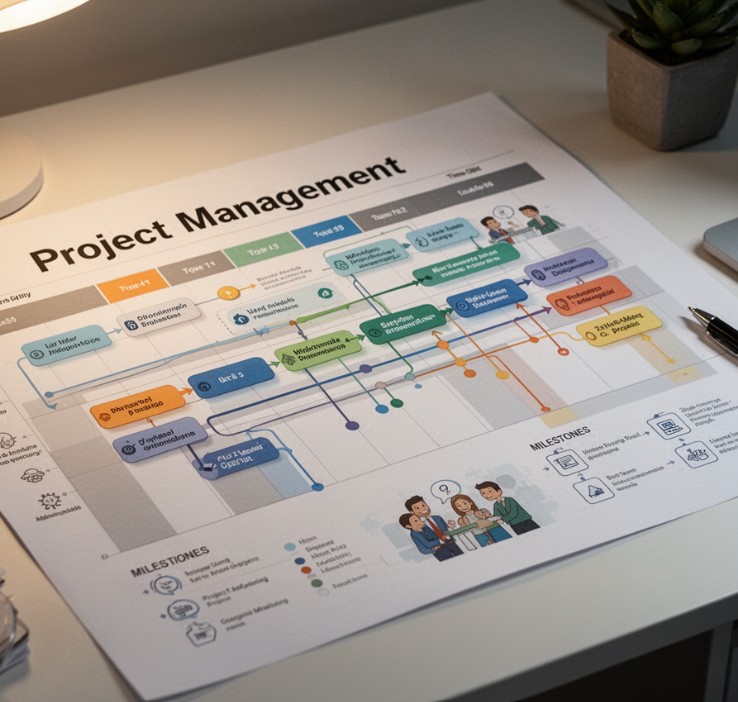
As an expert in PM and AI how do you see both developing?
TAO:
I view the development of PM and AI as a massive urban planning project. For decades our city has been run on bureaucracy. We forced highly creative Project Managers to act like clerks filling out forms and updating spreadsheets. AI is the new infrastructure that allows us to renovate this city. We are moving from an era of Bureaucracy to an era of Governance.
I see a future where we provide “Public Utilities” for PMs. Take the AI WBS Project Manager tool I developed. In the old city creating a Work Breakdown Structure was like digging a ditch by hand. It was slow manual labor. With this tool a PM brings their own API key and the AI instantly constructs the entire project hierarchy from a simple scope statement. It is like turning on a tap and getting clean water. The AI handles the structure so the PM can focus on the strategy.
This development means the role of the PM is shifting from a construction worker to a City Planner. We are no longer laying the bricks of the schedule ourselves. We are designing the skyline. We will use agile specific AI agents that do one thing perfectly to handle the noise while we focus on the signal.
My vision is a city where the “busy work” is automated by these digital utilities leaving the citizens free to build relationships, solve complex problems, and innovate.
Beata.
Frankly, I love your very descriptive idea of urban cities as that’s so simple for everyone to understand.
Outsourcing of repetitive tasks for decades was a big deal which reshaped so much the economic map of the world.
I like to talk with seniors (majority of my neighbors) and learn from them as the world which we have now is nothing like the landscape where they grew up.
The concept of clean-ups is very seductive although we all need to be aware first, we need to teach someone to clean, create systems of delegations, SMART goals to be on the position of Strategist. Here I would recommend my company and this is what we currently do. By working with small and mid-size tech companies we help them to develop tools to clean up successfully, so PM don’t have to be back to the bureaucracy stage.
As all of us have a gift of creating new solutions, some more than others, this will help us better utilize our potential. Of course, with safety measures implemented, like with every tool or project we learn as we progress through it.

Humans vs AI robots. Will they complement each other or compete as many people fear?
TAO:
A thriving city needs diversity to function and that includes digital citizens. The fear of competition comes from thinking that AI wants to take over the Mayor’s office. It does not. AI and robots are here to handle the sanitation, the logistics, and the heavy lifting so that the human citizens can enjoy the culture and community. They are the ultimate civil servants.
I often use the Cosmic Fortune App I built to illustrate this harmony. It combines the cold precision of gyroscope sensors with the warm human tradition of divination. The technology provides the data but the human spirit provides the meaning. In our City of PM this relationship is crucial. We need robots to be the “Sensor Network.”
For example I built a tool called Trend Tracker which acts like a city pulse monitor. It allows teams to vote in real time on whether a project metric is Improving Stable or Declining. The AI aggregates this data instantly creating a heat map of the project’s health. But the AI cannot heal the patient. It can only alert the doctor.
Only a human leader can look at that Declining trend and have the empathy to fix the underlying cultural issue. We do not compete because we occupy different districts. The AI runs the power grid but the humans decide where the lights go.
Beata:
Thank you for sharing all of these solutions, it’s truly impressive. People forget, or rather are overwhelmed by the massive stream of information about AI. That’s in my opinion a great source of scarcity for no reason.
The truth is that since a while we can see that simplification, streamlining, and outsourcing certain tasks simply works. Even if small companies have systems and knowledge sharing, they can do a better job and grow faster, so the AI agent will only take a job which people don’t like to do because it’s boring or dangerous like in the manufacturing process.
That’s honestly a very common question which I get from my clients, how to work smarter not harder and there are solutions to do it.
I am glad that so many great minds see it and create innovative apps and programs, and ask real people to help them develop user-friendly apps.
In the end humans will use them, right? Honestly, I can’t blame people for being deeply confused but quality will win sooner or later. Once your strategy is to build something which lasts, the attitude towards it is different and that’s how we should see AI, as a tool which will be with us and it’s up to us as end-users to decide how we will do so.
Customer demand is a huge power! And all of us have voice and a part in this transformation.
As many of my clients run manufacturing plants how can the marriage of PM and AI help us?
TAO:
If PM is a city then manufacturing is our Industrial District. It is the engine that keeps us running. But right now there is a communication breakdown between the “Shop Floor” and the “Top Floor.” As a Mayor my job is to improve this transit system of information. The marriage of PM and AI helps us by removing the friction that slows down production.
I developed the User Story Voice Analyzer specifically for this industrial context. Imagine a technician on the factory floor who knows exactly why a machine is failing but hates writing reports. They are a citizen whose voice is not being heard. With this app they simply press a button and speak. The AI listens to their voice in English or Chinese and translates it into a professional clear User Story that the management team can act on immediately.
This is like building a high speed rail between the factory floor and the executive office. It democratizes access to project data. Furthermore using tools like Trend Tracker allows plant managers to set up digital “Town Halls” for different production lines. Workers can signal safety issues or maintenance needs anonymously and instantly. This gives the plant owner a real time view of their district allowing them to govern with data rather than guessing. It turns a rigid factory into a responsive smart city.
Beata:
Great example, thank you!
Safety is my big concern because although since decades many aspects of safety at work have improved, there are still so many areas where we can do a way better job. No matter if this is coal mining or cosmetic laboratory, safety is crucial and many times overlooked because of the money factor. I truly hope that with technology ensuring safety, implementation of certain measures on much higher standards than now will be cheaper, more accessible, and more people will be aware of its importance .
For me the perception of safety is divisive between different parts of the world, so I hope this problem will be marginalized with expansion of user-friendly solutions. One of my recent projects is related to non-toxic apparel. It’s so easy to get lost in all these certificates and obtaining them is one thing, but working according to them long-term is a different story. Here AI can help not only with the boring job of going through endless documents but also with giving space to the factory manager, warehousing and production to work safer every day and ensure compliance with certain requirements is met 365 days per year, 24/7.
Having in mind your volunteering background ,how can we educate people about AI in order to make a difference?
TAO:
A Mayor’s most important legacy is the education of the next generation. We cannot just build tools for the elite we must build schools for everyone.
My volunteering work is my way of ensuring that the City of PM is inclusive.
I realized that if we want to make a difference we have to stop teaching AI as a terrifying math problem and start teaching it as a civic adventure.I created the Little PM Adventure game with this civic duty in mind. It is a text based game where children act as a “Little Mayor” of their own project. They make decisions they face consequences and they use AI to visualize their dreams. At the end the system generates a professional Project Charter for them.
This is about digital literacy. We are teaching these kids that AI is a tool they can command not a magic spell they should fear. By making education playful and accessible we empower the future citizens of our profession. We show them that they have a right to use these powerful tools to build their own futures. Whether it is a child in a workshop or a senior PM learning a new skill my goal is to ensure that no citizen is left behind as our city evolves.
Beata:
Education through tools and platforms which children already use is one which will have a higher conversion rate and with proper marketing can truly make a difference.
I have a feeling that a rule of creating healthy tension in marketing has been lost and translated into straight scarcity which is a pity and a harmful practice as it takes a longer time to undo the damage.
What I always suggest to my clients is to have their ears and eyes open to don’t get discouraged too fast.
All of us will adapt to changes as that’s very typical for our species and the speed of growth is also in our hands. Education starts from children, I totally agree with you, but I also see a huge benefit in getting feedback from the older generation as their perception of technology is different and questions which they ask are sometimes mind blowing in all good sense.
One of my clients asked me why his clients are so impatient as he doesn’t understand why all complaints on his website are about shipping time which took 24h from the date of placing order. When I realized how complex a proper response is to his question, I needed to pause and reflect.

What do you think about FOMO-based ( Fear Of Missing Out ) campaigns about AI ? Should an honest company give people a trial period to test an AI tool ?
TAO:
As the Mayor of this community I have a duty to protect my citizens from scams and bad actors. FOMO marketing is like a bad policy that taxes the anxiety of the people. It tries to trick small business owners into buying “Black Box” solutions they do not understand. It creates a culture of panic rather than a culture of progress.
An honest company operates like a transparent government. It must offer a “Proof of Value.” I believe that every AI tool should have a trial period just like a city allows you to walk in the park before you pay taxes for it. I designed the AI WBS Project Manager with a BYOK or Bring Your Own Key model for this exact reason. I want my citizens to see exactly what they are paying for.
If a tool does not save you time or improve your life you should not buy it. It is that simple. I describe this in my articles as an “Open Eyes” policy.
We need to help each other distinguish the signal from the noise. By demanding transparency and refusing to give in to fear we build a City of PM that is resilient, honest, and built to last. I am here to support the struggles of small companies and ensure that technology serves the people not the other way around.
Beata:
I can’t agree more. There will be and there already are many of, as I call them, seasonal scammers who will be on the market for 1-3 years, earn enough to transmute to something else. I’ve came across such a company a few weeks ago as their business culture was so awful that my brain couldn’t proceed how come they are on the market. What stays is a scamming mindset and business culture and escaping from their own bad reputation so the best what we can do is to have eyes and ears open, and ask questions. An honest company will have a trial-period, will answer questions, and will be respectful.
I like to explain it to my clients as an example of building a brand. It takes a while, but reputation is everything, and your product, quality to price ratio, how you treat others as well as your own employees is shown. Price tells a story about a company which doesn’t mean the most expensive solutions are the best, but we should see solutions to our problems not only as the key to the proper door but include in our assessment also the locksmith who made it.