Beata Leyland
Business Owner & Author of this article
It's almost a taboo topic to say that an employee will have a transition period before becoming freelancer and later business owner.
Intrigued ?
I have similar traits with many of my clients.
One of them is ambition and drive for success but another one is background.
Many started as employees and got burned out and sought alternatives. They are fighters; they don’t give up and neither do I as I spent almost 15 years working for others and at a certain point, I simply couldn’t fight with my nature anymore.
It’s almost a taboo topic to say that an employee will have a transition period before becoming freelancer and later business owner.
I’ve called it here taboo as with whomever I’ve spoken all face the same struggles.
Many apply the very harmful assumption that it’s kind of embarrassing to talk about it as we should naturally figure it out, right?
We are in an eternal transition period in life in one way or another and embracing it makes us stronger.
Let me share /debunk the myths, and harmful conceptions which keep so many talented and capable people static.

Clock story
One of my employers had a clock which showed every day how many years and days left until retirement… and nothing motivated me more to be freelancer than these figures
(the method works; try doing such calculations and be honest with yourself).
Here are some of the practical aspects which will change in you without sugarcoating reality.
Watch your thoughts;they become words.Watch your words;they become actions.Watch your actions;they become habit. Watch your habits;they become character. Lao-Tzu
If you assume that you will work 8h per day, have 30 days of holiday, and travel since the day one let me tell you that most likely it’s another myth nicely sold on social media.
Why?
Because it takes a while to land the first client.
Great portfolio, competitor’s analysis, and showing up on time is one thing, but at the beginning your biggest currency is the fact that you are available and for me it meant being almost glued to my laptop for the first 6-8 months.
The fact that I responded first to job offers and was available immediately to talk with clients helped me landing the majority of my jobs.
Part of your job will be searching for clients, part working on projects and doing fantastic work, another learning.
You will study a lot how to do work with clients, how to properly communicate with clients, how to create sales channels, marketing, manufacturing and much more.
In fact, you might find yourself working nonstop there will always be something to do, learn, explore, double check etc etc.
When will this phase finish you ask?
It depends on your case. For me it ended up as a big burnout after 9 months of working as much as I could.
I had a holiday and instead of enjoying free time I slept, dealt with mood swings and everything you can imagine related to burnout.
Why I am so open about it?
Because all people who I know ended up the same way and this point taught me how to organise myself in better way, respect my boundaries and time and made me realise all my mistakes.
Would I do anything differently?
I don’t know as freelancing was my only income, and I didn’t want to lose momentum. After my holiday in May I was already in a very different position as someone with good ratings, reputation and clients knocking on my door.
Also, honestly, I don’t think I would have learned differently as this was a breaking point when I stopped to see myself as an employee ( spoiler: article about abusive boss in me was released in December 2025! ).
The first few months I said almost always “yes” as I must build a portfolio, show work ethic, and keep clients.
I’ve also learned that my job will be perceived by everyone differently.
I can communicate the best way, deliver the best results and still the project might not be successful.
My role is to help someone by providing companies and clients with tools, data, and advice but I’m not in their head, I don’t see their reality as well as they do, and I can’t save their world if they are not ready for it.
That’s how I stopped to be a people pleaser and started to draw boundaries and redefine my calendar.
If I am not in good condition how I can deliver good results long-term. All of us can put on a positive mask for a few days but overtime and lack of sleep will be shown.
I’ve learned how to plan, strategize, and respect my clients and myself, as well as when to say no without guilt.
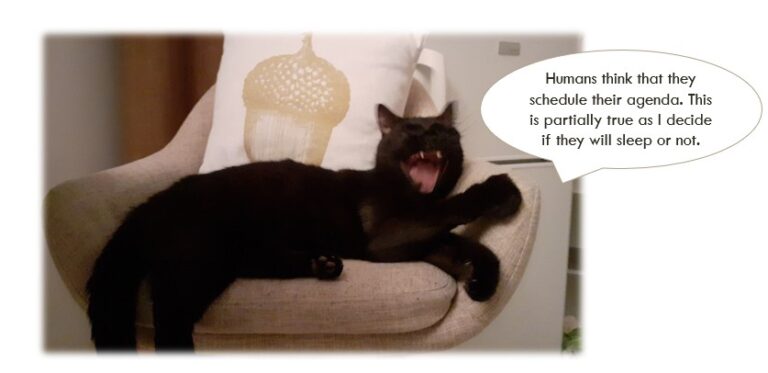
The biggest lesson was to feel that I manage my time and even if they are days where everything I planned the day before is gone within the first hour of work it’s up to me how I will go about it.
What I can control is my attitude.
Every day my work-life balance looks differently as I have periods of working 10+ hours per day, but also days when I work 2hours because the rest is time for my new hobby.
During holiday I do work but perhaps 1-2h per day in the morning or evening, which will not mess up fact that I am on holiday, and not every day.
For me this is way healthier than having a stomach-ache at end of holiday that I must come back to the office and deal with new office drama.
If I don’t create office drama myself it means, there is no drama.
We all have days when we feel incredibly motivated, and it’s great to use that energy.
But we need to remember that a week has more than one or two days.We need to distribute our energy for the entire week.
I repeated the mistake of overworking on “good days” until I realized that I had internalized the voice of an abusive manager—someone who was never satisfied with my work, who was always raising KPIs, and denying my human needs.
That mindset may work for machines, but not for people.
I encountered the same problem with my daily agenda as I did with trackers ( way too many of them… )
Because I work with clients worldwide, I need to check multiple communication channels in the morning.
Multitasking can be great to handle this, but only for a limited period, maybe an hour or two, or perhaps half a day if it’s busy, not the entire day and certainly not all week.
This was a habit which my nervous system knew and tried to replicate in different scenarios which brought burnout.

My main conclusion is to look at your habits and see what suits you and what is copied from somebody else, and you need to relearn how to do it better.
All solutions proposed online and offline from many amazing people could be a great inspiration, but it must be tailored for you.
It’s not about you fitting into certain brackets no matter what, it’s about using trial and error to see in which configuration you feel the most yourself at work and in life, while accepting your limitations and recognising that every day is different.
As a freelancer/business owner you work on your own clock.
Does it mean the whole world has to bow to you?
Of course not, but you also lead your time.
For instance, having calls in the morning, uninterrupted 3-hour work blocks once or twice per day, or dedicating a certain day for marketing.
This perception gave me the strength to say no when I was trained for years to say yes against my will. We all have the same 24h and it’s up to us how we spend it and where we draw boundaries.
 Call us,
 Text us,
 Book a Consultation.
We work on the global clock
Book a Consultation.
We work on the global clock 