

Beata Leyland
Business Owner & Author of this article
Market speculators were since always present on the market. They know how to spread fears to earn money and their main superpower is knowledge, market research and excellent communication skills.
Intrigued ?
As word the shortage is used to capture our attention so frequently, I would like to debunk myths and help distinguish speculation from a real shortage.
Unfortunately, this article was inspired by a bad example of someone who used a shortage to sell their own goods when a shortage hasn’t occurred.
This made me realize how often this happens.
A shortage happens when we have too big demand and not enough materials to fulfil demand.
Usually, shortages are caused by natural disasters like draught or climate change influencing the growth of cocoa beans.
Since a few decades we can observe shortages as the result of global supply chain cracks.
Every system has cracks and such situations are nothing new, in fact the exposition of weaker points is a great opportunity to cover gaps and make systems work better.
Part of Project Management, namely Risk Mitigation, is covering that.
The problem starts when you have huge volatility due to many unexpected causes.
What I mean here
the blockage of the Strait of Hormuz,
duties changing by the second without any plan,
and natural disasters.
In such circumstances is very easy to lose control and be way more volatile as an enterprise.
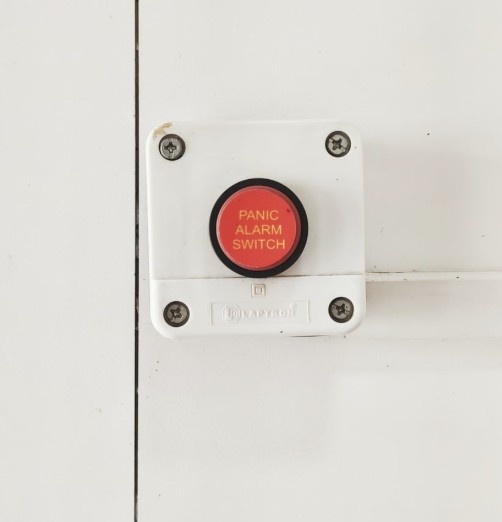
All articles about shortages here and there start to blind you and you become an easy target for market speculators.
Market speculators were since always present on the market.
They know how to spread fears to earn money and their main superpower is knowledge, market research and excellent communication skills.
Guess, what?
Your best weapon against them is gaining knowledge, market research and solid, firm communication as well.
I have sometimes have a feeling that all of us forgot that we can read and think on our own!
And when we do it, we stop to be an easy target.
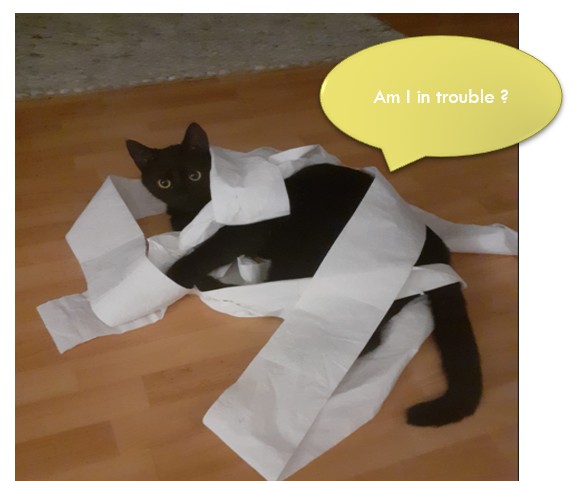
I don’t know if you know that here and there we have shortages of raw ingredients to manufacture for us essential items, like drugs.
It’s nothing new simply companies, both manufacturers and suppliers, learn how to mitigate it by diversification of sources, buying more and have excessive inventory, and analysing the market.
As mentioned earlier, the cacao bean shortage is also nothing new. Companies learn how to deal with it; what is possible and what not. Although proper planning might sound boring, it truly works. Of course, it doesn’t create such a tension like headlines about shortage of your pills against illness XYZ.
What I found particularly immoral is the fact that creating scarcity even became a marketing strategy.
Even if you don’t buy product A from company B by clicking in their article you spread it and help them in reaching out to more people spreading this same nonsense.
You are manipulated and you don’t even know how much.
What such articles create is unhealthy tension, which will lead you soon or later to falling into the arms of the speculation schema.
How to know if we really have a shortage of XYZ?
If we see that a major logistic channel like the Suez Channel or the Strait of Hormuz are blocked, of course it’s common sense that you can’t do as much planning, but in many cases you can do research and check if a shortage is really a hostage or just clickbait and if it affects you.
If you read and think a bit, you can clearly see that war in Ukraine and problem with sea transport might cause hunger in Africa.
In order to analyse what is truth and what not I would suggest economic forums and getting knowledge about events from very different sources than one about political affairs.

If you see that a tsunami happened in Asia and your manufacturers are there maybe you can find a similar manufacturer somewhere else or your current one will point you to a replacement.
If you have suppliers overseas, carrying bigger inventory is a good solution for risk mitigation.
I don’t mean huge but enough to cover you for 1-2 quarters. Yes, warehousing costs a lot, but nearly not so much like transport and raw materials in uncertain times.
Creating a reserve is one of the methods to mitigate risk, another can be a good inventory management, so you know what you have in stock, how real sales look like and which items are crucial to have.
Talking with your manufacturers and logistic companies is a big part of protection against speculators.
Pick people whom you can trust to work with and believe me you will know way in advance when shortage of product C might happen.
What to do if volatility is so big that is hard to manage it on your own?
Unfortunately, one website where you can find all shortages in the world doesn’t exist because this what will be considered as a shortage in Germany might not be a shortage in Japan.
There are government bodies which can publish such information but to be frank, I always use many sources to check and simply speak with people in the industry.

Then you need help.
You need an independent person who will do an audit of your supply chain and check on the market what is possible.
A good advisor will be able to help you reconstruct your supply chain but also create a strategy to avoid major disruptions in the future and mitigate the risk.
In order to truly help,
mutual respect is needed,
same as a well-constructed NDA, and time.
It doesn’t mean months rather a few weeks to come out with the solution tailored to your needs.
I would be cautious to copy and paste solutions from other companies as what might suit them 100% might be 60% relevant for you and you will end up anyway with the problem not solved.
It will not cost you a fortune but greatly help you with keeping your enterprise safe.
🔎 It’s worth being smart and thinking a few steps ahead.
BE SMART , CHOSE SMART
On our website you can find following articles for FREE as an inspiration
RISK MITIGATION
INVENTORY
CRISIS MANAGEMENT & more but only honest conversation can truly help you, to be frank.
DON’T WAIT FOR BETTER MOMENT… IT MIGHT NOT COME
 Call us,
 Text us,
 Book a Consultation
We work on the global clock
Book a Consultation
We work on the global clock 