

Beata Leyland
Business Owner & Author of this article
Many of us don’t understand that sometimes local products are … cheaper because they don’t contain additional transport costs, issues related to bureaucracy and the fact that your product is manufactured close to you.
Intrigued ?
Globalization is our reality, yet it is frequently challenged as global pandemics, wars, blockades and political instability
show how the new concept is and exposes gaps.
Thanks to globalization all of us can buy for instance a fridge, phone or clothes much cheaper but of course we pay a price for it by waiting longer, many times compromising quality and ethics, but also adding additional workload related with shipping costs, lead time and dealing with international trade laws.
In this article I would like to remind you that global trade has also a regional face which has been present for hundreds of years.
Some services thrive being local, the same as some thrive being globally spread.
It all depends on the nature of business, demand, and the fact that you don’t build a factory within a year or two.
The global Covid pandemic (2020-2022), but also the blockade of the Strait of Hormuz (2026) taught us all that although globally means cheaper it also means that diversification between global and local players is the key to stability and turning everything into global is not helpful for the end consumer.
Imagine calling a plumber and talking to AI (unfortunately happened to me in the U.S. in 2026!) or talking to an Infoline located in another part of the world.

What works on the regional level?
Maintenance services are obvious. You can’t wait for a plumber few weeks, you need it now.
Construction companies are hybrid as although they usually have their inventory from overseas, the human capital is local.
Many companies win using a hybrid model and as a company we encourage our clients to do so.
Smart cost savings without compromising quality and who doesn’t like to be smart, right?
Staying local and regional has a huge advantage!
Local pool of clients and way lower costs related to marketing as with a good reputation a word-of-mouth strategy works miracles.
Being approachable,
the fact that you can meet the owner and employees, ask for advice or customization would be much more complicated when you want the product being manufactured overseas unless you want the same customization for every item.
Imagine a wristwatch store.
If you need engraving many times they can do it on spot, the same with jewelry. People know you and can relate to you. Such a business has a short lead time,
no need to deal with duties, taxes, and additional bureaucracy.
Dedication and pride of work is many times overseen, and an Excel spreadsheet shows only figures not a whole picture of the manufacturing world.

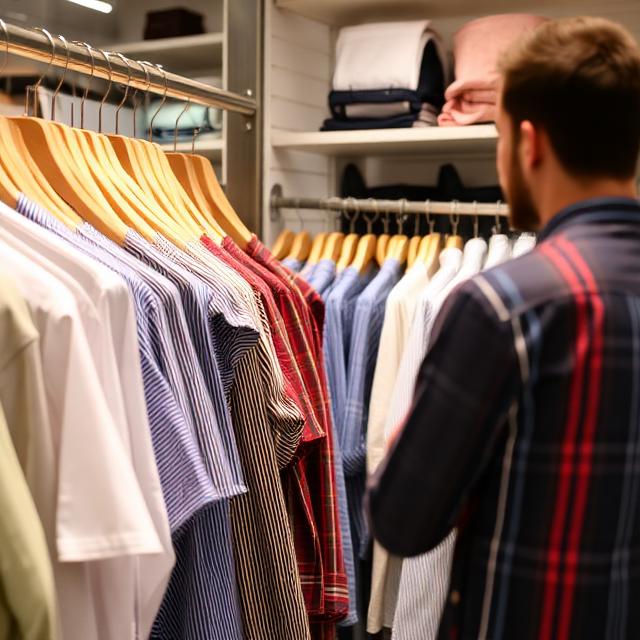
Apparel is a great example of diversification, with a huge percent of outsourced manufacturing but at the same time local boutiques and sewing manufacturers are booming in some regions of the world as people like to express their identity through clothes.
It’s much easier to do so when you use a tailor, small boutique, or even second hand /thrift store. Actually, the quality of clothes from thrift stores is often better than new items from popular stores.
Not to mention, it’s a sustainable approach towards pollution on the planet and a reusable approach to items which are in good shape.
Many of us don’t understand that sometimes local products are … cheaper because they don’t contain additional transport costs, issues related to bureaucracy and the fact that your product is manufactured close to you. The price truly depends on the product.
Shipping is an interesting example as many times goods are delivered damaged after a long trip,
and such problems are way easier to mitigate and solve when you pick local providers.
So many farmers nowadays offer their produce, and can even deliver to your door.
When you buy from them you not only support them directly, but produce has better quality and almost always you get something extra.
You save time, money, and commit to quality.
I am sure that if you search carefully, you can find plenty of goods and services which satisfy your needs, even exceed it, simply the marketing is not so aggressive like big chains.
As an example, healthy snacks from niche brands are much better than from big brands (my own opinion but also a suggestion for you to try.
I’ve tested both European and North American brands and this is true on both continents).
In the speed of life, we forget or overlook that we have plenty of options, and this is a true blessing of our times.
Some global solutions are great, and some are not.
The same for regional services.
How do you balance it?
How can you buy only ethical products besides reading labels carefully?
If we want to support small local shops, does it mean that the whole of Europe should now switch to locally based factories?
Not really, as we don’t have enough people although some politicians might use such ideas for populist purposes.
I truly believe that diversification and balance in trade is key, and this should be a goal.
We are the end consumer, so we will have a choice who we want to support.
Creating choice is the best way to educate people about conscious buying and consumption.
Do you need some help with smart savings and diversification of your portfolio?
Text us, and we can help you with expansion of your business without compromising quality.
 Call us,
 Text us,
 Book a Consultation
We work on the global clock
Book a Consultation
We work on the global clock 