

Beata Leyland
Business Owner & Author of this article
Many companies lose lots of money by marginalising one of the easiest ways to save costs smartly.
Intrigued ?
In my first article about inventory a few months ago I’ve written a few useful tips and basics for someone just starting.
The whole topic is way more complex than that and as a continuation I owe you an article covering a bit more.
Inventory Management is a strategic task which covers all ordering goods, checking them, storing, tracking and monitoring stock levels.
As you can see it’s rather complex.
Pareto rule tells us that 20% of our inventory generates 80% of the income, that’s why it is so crucial to spot such 20% and make sure they are always in stock.
When to order inventory? Well, it depends on you and your company specifics.
If your goal is to save money on storage, then the option to order it exactly at the time when it is needed would work.
This is way easier said than done, as for many companies with a volatile market this is something achievable after many years in business.
Model where you label your inventory and distinguish crucial stock, less crucial and nice to have is a golden medium solution.
Thanks to this method you will always have crucial items and ones which are moderately popular/used.
This method is a budget- friendly one however it requires knowing your business a bit already.
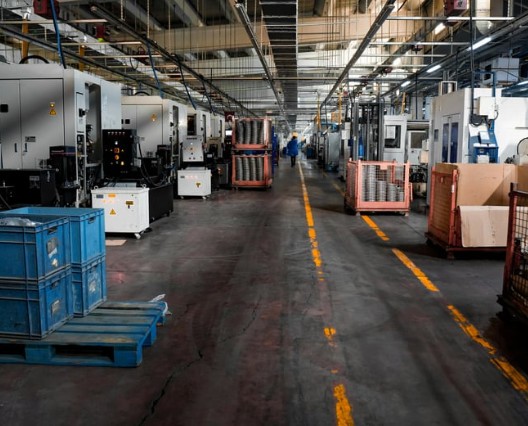
Production companies will think about inventory differently than retailers/ Ecom.
No matter if you run a retail store/Ecom or Manufacturing Plant your inventory data will be aligned with sales, overall company strategy, trends, and marketing campaigns.
Manufacturers always need to have in stock enough of all kinds of inventory to make sure production is not interrupted.
Their methods of risk mitigation, storage, planning must be way more complex as you simply deal with many variables at once.
Safety stock is a parameter which helps planning better and be less volatile on external circumstances.
For instance, as a chocolate factory you don’t want to run out of cacao, butter and sugar as well as different oils to make sure machines run properly.
If you are smart you don’t want to have cacao, butter and sugar from one place in the world, so think extremely strategically when you plan your production.
Here communication across the company is crucial.
Production must be upfront about what doesn’t work and where know-how is missing.
Maybe you have new machines, and your employees still learn how to use it.
It’s natural that getting know-how takes a time.
All machines need maintenance which also requires time, special products and knowledge.
All of that must be included in the plan of production.
In terms of disposition of raw ingredients/ products the most popular method (especially for products with expiration date) is FIFO.
First In First Out guarantees not an old stock in your warehouse.
Every time when we deal with production or clients, we will also have waste as an outcome.
Goods can arrive to us already in bad condition, our suppliers might make mistakes, or a client will not pick up package.
What is crucial is to record such events, track them and try to create a system which will prevent damaging goods to minimum.
If goods are damaged due to your production process, perhaps an inspection of the machines, or workshop for employees is needed.
Maybe warehouse workers overlooked expiration date and now you deal with waste which must be disposed.
It happens, so don’t panic. Bear in mind that disposal will cost you additionally.
If your supplier constantly sends you products /materials which are damaged it will be easier to discuss the issue with them having pictures and data from your inventory.
Both parties will have opportunities to discuss what can be improved.
Damage during transport happens.
Let your employees know to be mindful how logistic company carried your goods.
Maybe not enough secure measures have been applied? Again, take pictures, collect data and you will ease your life later.
Maybe every time you use carrier X goods are delivered with delay and boxes are smashed?
Record it, report and make sure you don’t wait too long to clarify it.
Many companies lose lots of money by marginalising one of the easiest ways to save costs smartly, so record what hasn’t been done correctly or as planned.
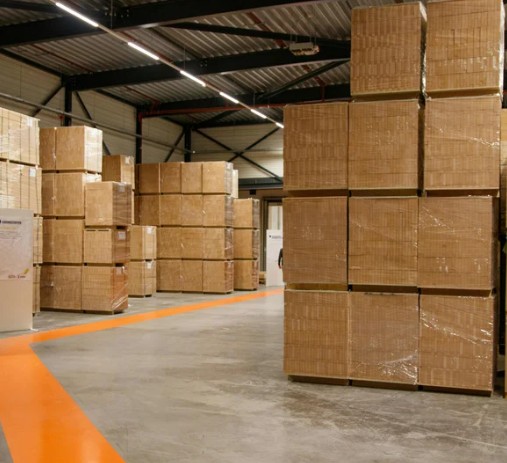
Now a few words about storage and warehousing.
Warehouse must be adjusted to your company needs.
If you run a chocolate factory, A/C and maintaining a certain temperature is non-negotiable.
If you order by trucks bear in mind that a delivery car must park and unload the goods without major problems.
Security is a must of course, same as the system which will help you to control and secure stock.
Many companies store safety stock or crucial stock separately for a security purposes.
If you sell on a big market then maybe a central location on the map would be a good idea, as far if this location has good infrastructure (roads, warehouses, employees).
In the U.S., such warehousing HUB is in the South, for instance Georgia.
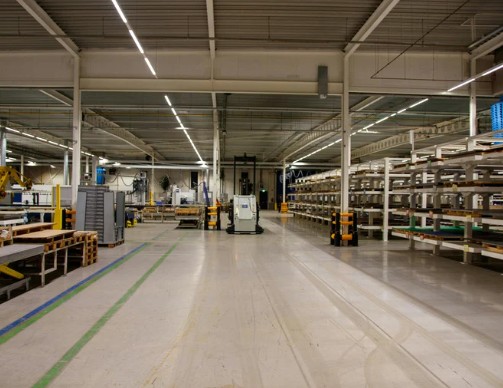
If you rent a warehouse, make sure you read the whole contract and ask as many questions as possible.
Who is working there?
How does security look like?
What is provided and what not?
Maybe you will need to buy additional insurance.
I plan to write also an advanced inventory article where we will take a closer look at different systems of tracking inventory and the most common mistakes while doing it.
If you need help with inventory management, risk mitigation, stock control or setting up system will suit your company to track inventory we are here to help you.
🔎 It’s worth being smart and thinking a few steps ahead.
BE SMART , CHOSE SMART
On our website you can find following articles for FREE as an inspiration
RISK MITIGATION
INVENTORY
CRISIS MANAGEMENT & more but only honest conversation can truly help you, to be frank.
DON’T WAIT FOR BETTER MOMENT… IT MIGHT NOT COME
 Call us,
 Text us,
 Book a Consultation
We work on the global clock
Book a Consultation
We work on the global clock 