
Beata Leyland
Business Owner & Author of this article
Supply Chain World changes with resources which are at our disposal. Necessary changes are coming no matter how loud people will scream they don’t want it.
Intrigued ?
Climate change is something which we need to live with, adapt, and prevent to the best of our ability.
Subtle or big changes are easily noticeable in supply chain which then is reflected in our daily living.
How can you spot climate change in global trade?
It’s rather easily unfortunately.
Shortages are the most noticeable.
Sometimes they occur on a seasonal basis but increasingly the fight for global resources is pronounced.
Coffee beans, cacao beans for instance which suffer due to draught become a commodity which we think are for granted where they are not.
There are shortages of seafood, fish, raw materials used for manufacturing.
Not mentioning water.
How can we deal with it? How can we mitigate the risk?
Step zero is awareness.
Massive consumption is a huge cause of climate change which we have now.
Marketing campaigns and social media tell us constantly what we miss out not having or not eating product A, B or C but many times we don’t need such products at all.
What we lack is validation that we belong to a group which consumes such products not the product itself.
I would like to start from zero, so awareness of shortages and how to mitigate risk as a consumer but also company (very high-level view).
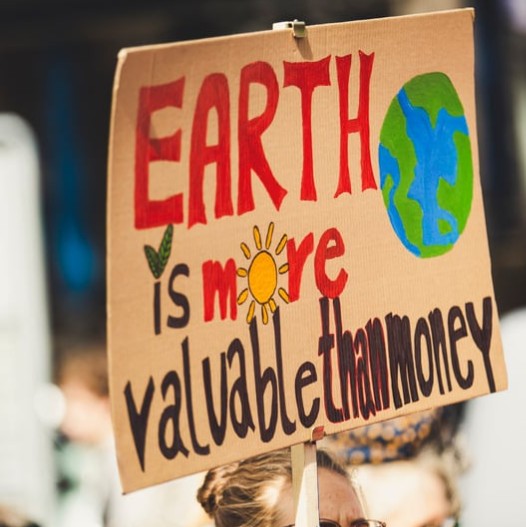
Food. Migration. Radicalism.
With so many billions of people living on the earth, food supply is getting increasingly crucial.
Coffee and chocolate I would say are nice to have (although I would be sad not having them on a regular basis) but problems with seafood, fish, grains are way more impactful.
Hunger has always caused migration crisis, and this causes tensions in society.
I was surprised to discover in 2025 that Alaska has issues with salmon supply (shortages), and Boston with lobster. Partially it is because of supply and demand. That’s only part of the equation because rising sea temperatures and pollution play a huge role here, too.
In many places quotas are established to make sure certain species are not extinct.
More severe situation is in Africa.
Due to Ukraine War, grains don’t get on time to Africa and many people starve.
Starving people migrate to Europe which causes political tensions. It’s only one example.
Fight for resources and world dominance over them has been a problem for centuries, always causing tensions, and many times wars.
How to mitigate such a risk?
By changing consumer patterns which takes time, education of society but also every small step here matters.
If you love chocolate or coffee be mindful from where you buy it and in what quanities.
It’s truly uncomfortable to find out that your favourite product can be very harmful.
I’ve learned last year that in some regions of South America monkeys collect cocoa beans and let me tell you they are not treated well.
Maybe it’s time to redirect your shopping patterns.
If you are chocolate factory what you should do?
Source responsively but also work on alternatives.
There is such a rising market for healthy replacements.
Water.
This one is a big one as ground water levels in many places is getting lower and the Great Lakes in the U.S. can’t supply the whole world.
We shouldn’t also forget that humans are not the only species which needs water.
AI beautifully shows humans that. It’s almost a mirror reflection how we treat many times nature around us assuming only we need clean water.
They are many great projects across the whole world working on desalination of oceans so we can drink such water, but this will change water ecosystems.
Also, our water resources everywhere are very polluted.
How to mitigate risk as a consumer?
Be mindful with water consumption and usage of chemicals.
If you buy clothes be aware where your clothes are manufactured and how. Apparel can not only poison you but also ecosystem.
How to do it from a company perspective?
If you are manufacturing plant, you don’t always need a pure water.
Many times, water used in production is purified water, or so-called recycled water.
Not polluting rivers, soils and responsible waste disposal is a huge step which you can do as a company.
What if you are Ecom?
Source responsively.
There are more ecofriendly companies than we think and by choosing them you will have a more responsible circle of clients.
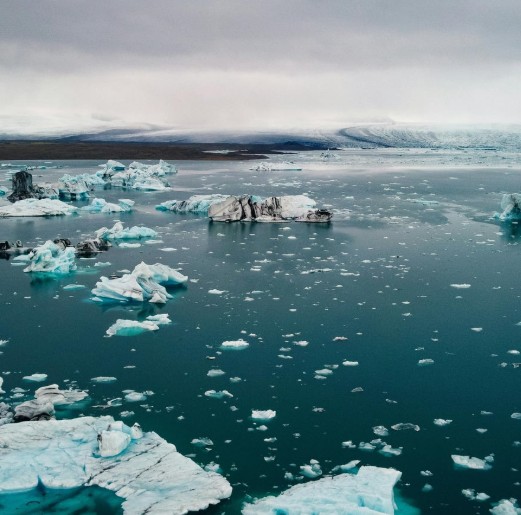
Tacking Food and Water is only touching the tip of the iceberg as the depth of this topic is way more than that.
One topic raises many more and is like a domino. If one is falling it means all of them will too, the question is when.
Supply Chain World changes with resources which are at our disposal.
Necessary changes are coming no matter how loud people will scream they don’t want it.
I wish all of us learn how to see world in 3D and see all connections which we have developed through the centuries.
Our awareness would increase and we could better mitigate resources.
The sooner we adapt the better.
Source responsibly, choose smart solutions and don’t fight with reality, adapt and respect it.
 Call us,
 Text us,
 Book a Consultation
We work on the global clock
Book a Consultation
We work on the global clock 