


Author of this article & CEO, Founder SH Focus Oy
Sari Hildén
Ethical AI, New Leadership and Mindset Change
Intrigued ?
Introduction-Beata Leyland
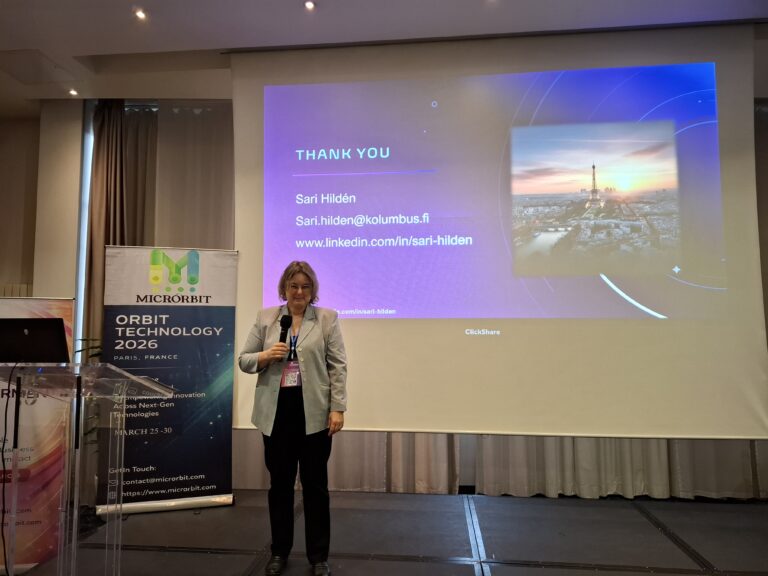
I’ve met Sari few weeks ago in Paris during a conference where both of us were speakers ( MicrOrbit ).
Leaders from literally all over the world had a privilege to share thoughts, discoveries and worries about AI, business improvement and well-being.
Believe me or not, but the words “ethical “ and “bias” were present in almost every speech which brings me hope towards the future, as acknowledgment of own gaps is a first step to repair what is missing.
Sari presented the topic “Rewiring Leadership: Adapting Our Mindset to Lead Human-AI Teams” which helped me better understand the challenges of AI adaptation as like majority of us I am not free from worries about ethics and being biased about AI.
Let me present you an interview about ethical AI, leadership needed to implement AI properly, and what all of us can do to make sure AI used around us is ethical.
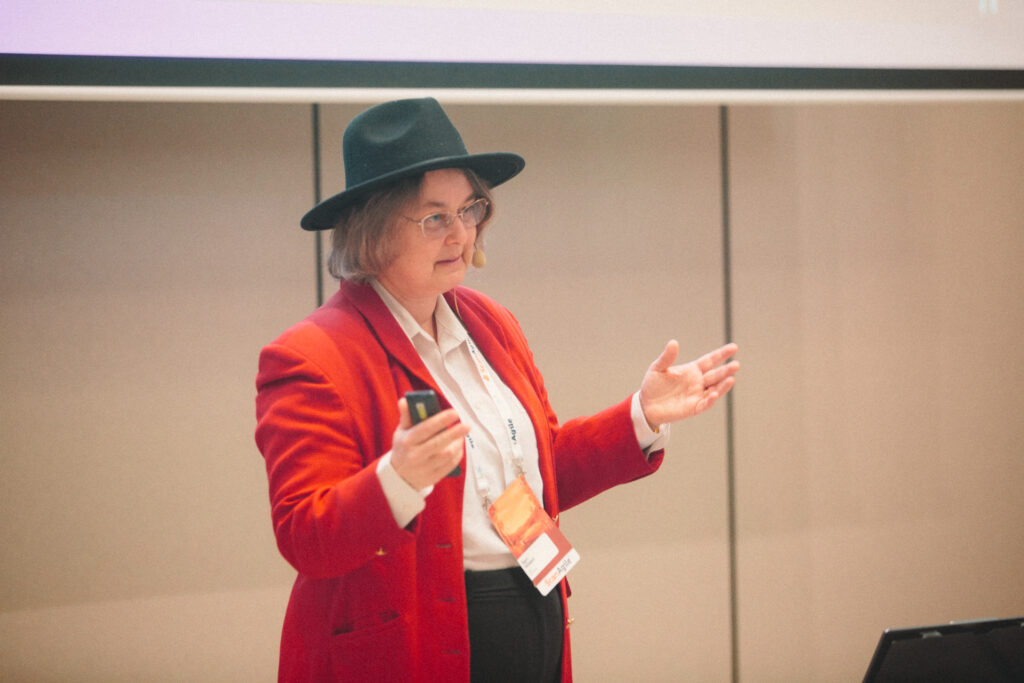
I am Sari Hildén, the CEO and founder of SH Focus and a passionate advocate for the intersection of technology, leadership, and human-centric growth.
With over 25 years of experience in Project and Program Leadership, I have navigated the complexities of large-scale digital transformations and strategic shifts.
Currently, my work focuses on “Rewiring Leadership”—helping organizations adapt their mindset to effectively orchestrate human-AI partnerships. At SH Focus, we treat AI and modern project management not just as tools, but as strategic assets.
My mission is to bridge the gap between technical innovation and ethical implementation, ensuring that even as technology leaps forward, we keep the “human” firmly in the driver’s seat.

Ethical AI – what does it mean for you?
For me, ethical AI isn’t just a compliance checklist; it’s about intentionality, transparency, and what I call the “Ethical Pulse.”
The Ethical Pulse is the human-driven filter that asks “Should we?“ instead of just “Can we?”.
While AI is incredibly efficient at following logic and instructions, it lacks a conscience.
The “Pulse” is that uniquely human ability to feel the moral weight of a decision and ensure our values aren’t lost in the pursuit of automation.
In this era, ethics means taking full accountability—because accountability is not an algorithm. We must manage AI as if it were our “most brilliant, yet riskiest hire.” Imagine a team member who is lightning-fast and knows everything, but has no common sense, can confidently “hallucinate” facts, and doesn’t understand the real-world consequences of its actions. You wouldn’t let such a person make autonomous decisions without supervision.
Simply put: if we can’t explain why an AI made a certain decision, we shouldn’t be using it for critical outcomes.
It requires our “Ethical Pulse” to provide the heartbeat and context that the machine simply doesn’t have.

What kind of leaders we need to keep up with AI?
To keep up with AI, the era of the “all-knowing” supervisor is over.
We need “Curious Orchestrators”—leaders who act more like conductors than managers.
An Orchestrator doesn’t just check boxes; they “check the soul” of the work and focus on human-centric value.
The most critical tool for this new leader is High EQ (Emotional Intelligence). In the AI era, EQ is much more than just “being nice”; it is the strategic ability to recognize and manage emotions—both our own and our teams’—to influence outcomes.
As AI takes over analytical and repetitive tasks, empathy and emotional intelligence become the “new luxury brands” of leadership.
To succeed, an Orchestrator must focus on three things:
- Contextual Nuance: This is the ability to “read the room.” AI’s data-driven logic sees numbers and patterns, but it cannot feel the “vibe,” understand the hidden history of a team, or sense the unsaid tension in a meeting. Only a human leader can navigate these nuances.
- Adaptability and Psychological Safety: AI can bring a fear of job loss and uncertainty. Leaders must foster an environment where it is safe to experiment, fail, and “unlearn” old habits as fast as we pick up new tools.
- The Human Premium: When efficiency becomes a commodity provided by machines, the leader’s value lies in their humanity. We need leaders who lead with heart and ethics, ensuring that technology serves people, and not the other way around.

What we can do as companies and clients to make a change towards ethical AI?
We hold significant power through our choices, our questions, and the cultures we build. To drive a shift towards ethical AI, we must move beyond theory and take intentional actions:
- Kill the “Cheating” Stigma & Demand Transparency: We need to move away from hiding AI use. Instead, we should embrace radical transparency as a form of authority. As clients, we must demand this same transparency from vendors—asking exactly how their models are trained and where the data comes from.
- Set “GPS Guardrails” and Governance: Every company should establish an AI Ethics Charter that defines clear boundaries—what we will and won’t do with AI. This includes defining “No-AI Zones” where human judgment and ethical oversight are non-negotiable and mandatory.
- Value Judgment Over Hours: We must shift our focus from measuring efficient volume to rewarding “Human Lift”—the unique value and critical thinking a human adds to an AI output. This is a direct ethical choice: if we only reward speed, we encourage ethical blindness. If we reward judgment, we encourage the human responsibility that machines lack.
- Prioritize Diverse Perspectives: Bias often enters systems not through malice, but through a lack of different viewpoints. We must ensure that the teams implementing AI are diverse to catch these blind spots during the development phase, ensuring the technology serves everyone fairly.
How do you see AI transforming our world within 2 years from now?
By 2026, I believe AI will move from being a novelty or a standalone tool to becoming an invisible fabric in our daily workflows. However, the most profound transformation won’t be the technology itself, but how it shifts the value of human contribution. In this near future, efficiency will become a mere commodity, and the true differentiator will be the “Human Premium.”
Here is how that transformation will look:
- From Search Engines to “Ghost Teammates”: AI is evolving from a tool we use for tasks into a true reasoning partner—what I call a “Ghost Teammate.” Think of it as your most brilliant yet riskiest hire: it has infinite knowledge and speed, but no common sense or moral compass. It’s “ghostly” because it operates invisibly in the background of our strategic thinking. While we delegate the heavy lifting and mechanics to this partner, humans must provide the Strategic Intent—the “North Star” that guides the technology toward a meaningful goal.
- The Shift from “Doing” to “Judging”: The focus of work will shift from production to curation and verification. As AI-generated content becomes ubiquitous, the world will stop measuring value by production hours and start measuring it by the quality of human discernment. Our role is no longer to generate the draft, but to provide the “Human Lift”—the final layer of critical thinking that makes a result trustworthy.
- Personalization and Craftsmanship: We will see hyper-personalized services in fields like education and healthcare that were previously hard to scale. Simultaneously, as the market becomes saturated with automated outputs, there will be a renewed “premium” on authentic, human-to-human experiences and genuine craftsmanship.
- Humanity as the Ultimate Tech Skill: Perhaps most ironically, I believe that within two years, humanity itself—our empathy, ethics, and ability to provide Contextual Nuance (reading the “vibe” of a room)—will be recognized as the ultimate “tech skill.” In a world of automated output, the “human touch” will be our most valuable and irreplaceable asset.